Showing posts with label Blooms in October. Show all posts

Sunday, November 7, 2010

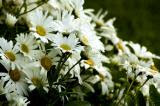
Nipponanthemum nipponicum (Montauk Daisy)


Nipponanthemum nipponicum

(Montauk Daisy)

This Daisy is a strong, hardy plant that can survive adverse conditions, including drought. It requires little in the way of care, making it a popular plant even with beginner gardeners. There are a few variations on how it got it's name of Montauk Daisy.

After researching it's history I came across this story and it is my favorite:

Posted by Donn of Seaside, New York on Friday, September 24, 2004

'Several years ago, before I moved to Long Island, I used to work in the City, and lived in Queens. I spent untold hours driving to and from Montauk, to surfcast The End.

One night, I was fishing beside an older gentleman who lived in one of the little known small towns, inland (if that's possible) from the coastal towns out there, a town called Springs. He was a retired commercial fisherman, and the fishing was poor, so we chatted through the night, mostly about his fishing career and surfcasting. After sunrise, we were packing up to leave, and he invited me to his house for breakfast, which invitation I gladly accepted.

I followed him west in my van, and we pulled into an oyster shell paved driveway that wound back into a gorgeous landscape of flowers, shrubs and grasses. It seems surfcasting was not his only hobby. He fed me a fish and eggs breakfast, and, with a mug of hot coffee in my hand, he fed me a tour of his gardens.

I won't get into the rest of his landscape, but one bed, snuggled in next to a tiny grove of Beach Plums, jumped out at me. It was approximately 12' in diameter, crudely oval in shape, and both lined and interspersed with beautiful medium sized stones. The only other occupants of the bed were a gorgeous cluster of Montauk Daisies.

I'd seen wild clusters of them along the shoreline from the point back to the village, but I'd never seen them in a garden, and I asked him what they were. He said "They're Montauk Daisies now," with a sneer and a salty look to punctuate his answer.


He went on to tell me that he started the plants that filled the bed with seed gathered from the cliffs along the surfcaster's path. He stuck an envelope into his waders, and slogged up to the plants at the end of their blooming season (which is the height of the fall fishing run), and taught himself how to find and harvest the seeds. The rest is evident in his gorgeous little bed.

This all happened in the 50's, when the villages on the South Fork were not as developed as they are now. In the course of the gentrification of the area, nurseries and landscape professionals moved in, and decided that the ubiquitous Nippon Daisy was an important facet of any locally correct landscape design, but the name was all wrong. They changed it to Montauk Daisy.


I have never researched this subject, so I have no idea if it's really what happened, or the caffeine-augmented sleepy rambling of a fisherman/gardener. It's true enough for me.'

*****

So there you have it - the story of the Montauk Daisy.

I am a fan of this plant and I can't wait to try some of the hints that I have been reading about. If you are looking for an easy care plant that blooms well into the cold weather and also looks glorious - the Nopponanthemum nipponicum is for you - all the way from Japan and now well established in Montauk, Long Island!


Thursday, October 21, 2010

Montauk Daisies - October 2010

Montauk Daisy - Chrysanthemum Nipponicum


Two years ago in October I was taking a drive in the countryside in Western New York when I passed a farm that had an enormous display of white flowers for sale. I made a U-turn and stopped. I had never seen these flowers before – they were not exactly chrysanthemums and not exactly daisies. Thus I was introduced to the Montauk Daisy, named after Montauk, New York, which is a city on Long Island.


They were beautiful, looked very sturdy and best of all they were $3 for a gallon size pot. I purchased 5 of them and placed them in various parts of my garden not really knowing what to expect.

Well, the outcome has been amazing. They have grown about 3 feet high and maybe 4-5 wide
As its current Latin name suggests, this daisy originated in Japan (Nippon). This plant is native to the island's coastal area. Montauk daisies like well-drained sites with full sun. They are rated for growing in zones 6 to 10, which means that most temperate zone gardeners can enjoy this flower.


During spring and summer the he Montauk daisy will spend most of the growing season as a pleasant leafy filler in your flowerbeds. Foliage is deep green, with a slightly leathery texture, the stems grow from hardy roots into a tall, bushy "sub shrub."
The three-inch leaves are toothed and oblong, similar to the Shasta daisy and chrysanthemum cousins. In early October, dozens of classic white, yellow-centered blooms open and adorn the plant until hard frost (28 degrees F).
They are deer-resisting, butterfly attracting.


I have learned that because the Montauk daisies begins to green in the flower bed a month or two before the time to plant summer annuals, croci, pansies, daffodils or early tulips can be planted around the plant to take advantage of space later to be shaded by the growing stems.
They do need pruning and pinching off new stem growth in the spring and early summer should control their growth. The rule of thumb for the Montauk daisy is 'cut it in half on the first of June and again on the first of December.

The origin of this daisy: It was named Nipponanthemum, which roughly translated means Japanese flower. In the 1860s, a Russian botanist, Carl Maximowicz, brought the Nippon Daisy to his botanical garden in St. Petersburg. He distributed many of these plants around the world so that more people could study them and appreciate their beauty. The Nippon Daisy flourished well on Long Island and is now known in the United States as the Montauk Daisy.
The blooms of the Montauk Daisy last for a long time. They are also great as cut flowers because they have tall stems that are quite strong.

More on this flower in my next posting.

Sunday, October 17, 2010

Still blooming in October - 2010

A window box on my front porch has been happily blooming since May -
Nicotiana, pansies, alyssum and impatiens.


Sedum is plentiful in the Peace Garden along with Russian Sage
Let the Sedum stand during the winter months after they have turned brown,
they provide wonderful
viewing as they stand up straight during the snow.


The Japanese Anemone is flourishing well and is in it's full glory in October


Plenty of Cosmos still waving in the breeze


Jerusalem Artichoke is standing tall and in full bloom


Datura - Belle Blanche also called Jimson Weed


Morning Glory - Cardinalis


Moonbeam Coreopsis has been blooming for several months now and
is just starting going to seed.

*****
I am enjoying these flowers, however, the daily weather reports state that the temperatures are falling overnight so we will see how long they will be able to share their beauty with us.


Wednesday, October 28, 2009

Jimson Weed - Part II

The Sacred Datura blossom has long captivated artists and poets The Jimson Weed (Datura Stramonium) appears in paintings by the famed Modernist artist Georgia O’Keeffe. (1887 – 1986) - Known for the flower paintings, which encompass a quarter of her work, she was originally inspired by nature during her childhood in rural Wisconsin.

Jimson Weed (Datura Stramonium)

The following is a legend about this beautiful flower.

When the early settlers arrived on Jamestown Island in Virginia in 1607, the location was considered perfect. They were able to look outwards, along the coastline, for Spanish conquerors and the deep channel allowed the navigation of their ships.

They thought it curious that there were no Indians on the island and it wasn’t too long before they realized why.

The island’s drinking water was polluted and there was very little wild game or any other food sources available.

Some of the settlers made a formidable error by experimenting with eating the plant life that was available. They were especially attracted to this seductively beautiful flower, however, they soon realized that the side affects of ingestion of the Datura were delusions, convulsions, and respiratory failure, which brought about their eventual deaths.

The survivors of those who died always remembered the consequences of eating the beautiful flowers. When, seventy years later, the British soldiers arrived to arrest an uprising of the colony, the settlers slipped Datura leaves into the soldier’s food. The British soldiers did not die, but they did go crazy for eleven days, temporarily giving the colonists the upper hand. As the story is told the plant became known as Jamestown weed, and over the centuries that was condensed to Jimson weed.

There are several well-documented stories of people who have experimented with smoking, brewing, or cooking with Jimson weed that led to coma and eventual death.

Jimsonweed which grows to a height of 2 to almost 6 ½ feet has large, white or violet, trumpet-shaped flowers, and produces a large, spiny fruit to which the common name thorn apple is sometimes applied.

This plant promises a fairyland of delicate beauty, moths, butterflies, long-tongued bees, hummingbirds and magical moonlit nights. It gives rise to some of the plant’s other names, for instance, Angel’s Trumpet, Moon Lily, Moon Flower or Belladonna (beautiful lady).

Scientists regard the plant as a perennial deciduous herb. Which means that it lives for at least three years. It is also extremely poisonous, with the concentration of toxic levels varying from plant to plant. It loses its leaves in the winter.

Members of the nightshade family, all Daturas are poisonous. The dramatic purple Moonflower, Datura inoxia flourishes throughout the South Western area of the United States.

*****

I have no doubt that this persistent plant will reappear in the Peace Garden in the springtime but this English women has learned the lesson of her forefathers and will leave it alone. :-)

Friday, October 23, 2009

Jimson Weed


Jimson Weed in full bloom


The plant produces a large, spiny fruit to which the common name thorn
apple is sometimes applied.

When the pod seed is dry it then pops open and scatters hundreds of seeds to the four winds.

*****

Two years ago I was having lunch at a local outdoor restaurant in my community. While sitting next to their flower garden one plant drew my attention -it had a strong green vine with dozens of large white ‘trumpet’ shaped flowers.

I was curious and later I looked it up in my gardening books. There it was – an amazing flower with many names. Jimson Weed is also known as Datura, angel trumpet, and thorn apple.

Last year I saw it again in a garden center. It was late in the season and the plant was on sale in a 6” pot. I purchased it, brought it home but for some reason I never got around to choosing a place in the Peace Garden for this flower. It remained in the pot, went to seed and winter came.

I didn’t give it much thought until this spring, when I noticed many little plants showing up around the garden. I recognized it as the Jimson Weed and pulled most of them up but let two get established. One of them produced just two or three flowers but the other grew to about 3 1/2 feet high and was at least 5 ‘ in circumference. There were over forty blooms on this plant. It was glorious, amazing and a beautiful sight to behold.

It was still blooming strongly until this week when I decided to pull it up and throw it in the rubbish bin. This was an emotional moment for me, as I just don’t have it in me to destroy a flower, especially when it is in full bloom. So why did I do that?

Well, over the summer months I had been reading more about the Jimson Weed and I learned that this seductively beautiful flower has another, more sinister side. If the plant is ingested one can be led to a dark and fearsome netherworld of poison and potential emotional collapse, physical sickness and even death. The onset of symptoms can hit in a half hour according to the Massachusetts Poison Control System. If the seeds or other parts of the plant are ingested, the symptoms kick in within one to four hours.

The chemicals in Datura will block receptors in the brain. The plant contains some of the same chemicals used in antihistamines and drugs used to control psychosis.

These parts of the plant have given rise to alternative names such as Devil’s Trumpet, Deadly Nightshade, Thorn Apple, Mad Apple, Hairy Jimson-weed, Stink Weed, Green Dragon and Locoweed.

After researching the history of this plant I felt torn. I wanted to keep it in my garden but I became concerned. It was then that I discovered that I have something in common with a famous person in history.

In a letter to a friend, who had sent him a sample of the Sacred Datura (Jimson Weed) for the Monticello gardens, Thomas Jefferson said, “…I have so many grandchildren and others who might be endangered by the poison plant, that I think the risk overbalances the curiosity of trying it.

So, there you have it. The reason that I pulled up and discarded this glorious and mystical flower is that I have a one year old grandson who will be playing in the Peace Garden next summer. I cannot expose him to the dangers of the Jimson Weed, which even if one does not ingest the flower it can cause severe rashes on the skin when touched.

Sometime Mother Nature can have her contradictions as she provides us with her visual delights with treacherous consequences. This flower definitely comes under the heading of ‘you can look but don’t touch.’

Dangerous!